Storied by Nature
A Pottawatomie word for winding, a mill on the creek, and old storefront names going back onto the brick by hand. Antioch keeps its history where you can walk to it.
Sequoit means winding
Sequoit is a Pottawatomie word meaning winding. In Antioch it stuck to almost everything: the creek, the high school teams, the way the town describes itself. The Pottawatomie lived on this land until the 1800s, and farmers in the fields around town still turn up their artifacts.
The creek is also where the town went to work. Hiram Buttrick built a sawmill on Sequoit Creek in Antioch's first years, and a working replica of it stands on the same water today, put up by residents rather than by a preservation office.
None of it sits behind glass. The mill was rebuilt by neighbors and it still runs tours. The old storefront names are being hand-painted back onto downtown brick. Sequoit Creek itself spent decades running through a culvert under downtown, and when the culvert failed the village brought the water back to the surface and built a park around it at 845 Main Street. History here gets maintained, which is a different thing from preserved.
Hiram Buttrick's mill, and the walk to it
Buttrick's sawmill cut the lumber for the first version of Antioch. The building standing on Sequoit Creek today is not that one. It is a working replica, raised by residents on the same water, and the village runs tours of it, self-guided or in a group.
That distinction stops mattering much once you are on the bank. The mill is a walk from downtown rather than a drive, which is the way to do it. Check the village calendar for tour times before you go, and leave yourself a few minutes on the creek either way.
Brick, and the names going back onto it
Antioch burned more than once in its early decades, and what went back up each time was brick. That is most of the explanation for the Main Street you are standing on: the storefronts, the churches, the alleys running between the blocks, the scale of it. Nobody sat down and designed that. It is what a small town builds after a fire.
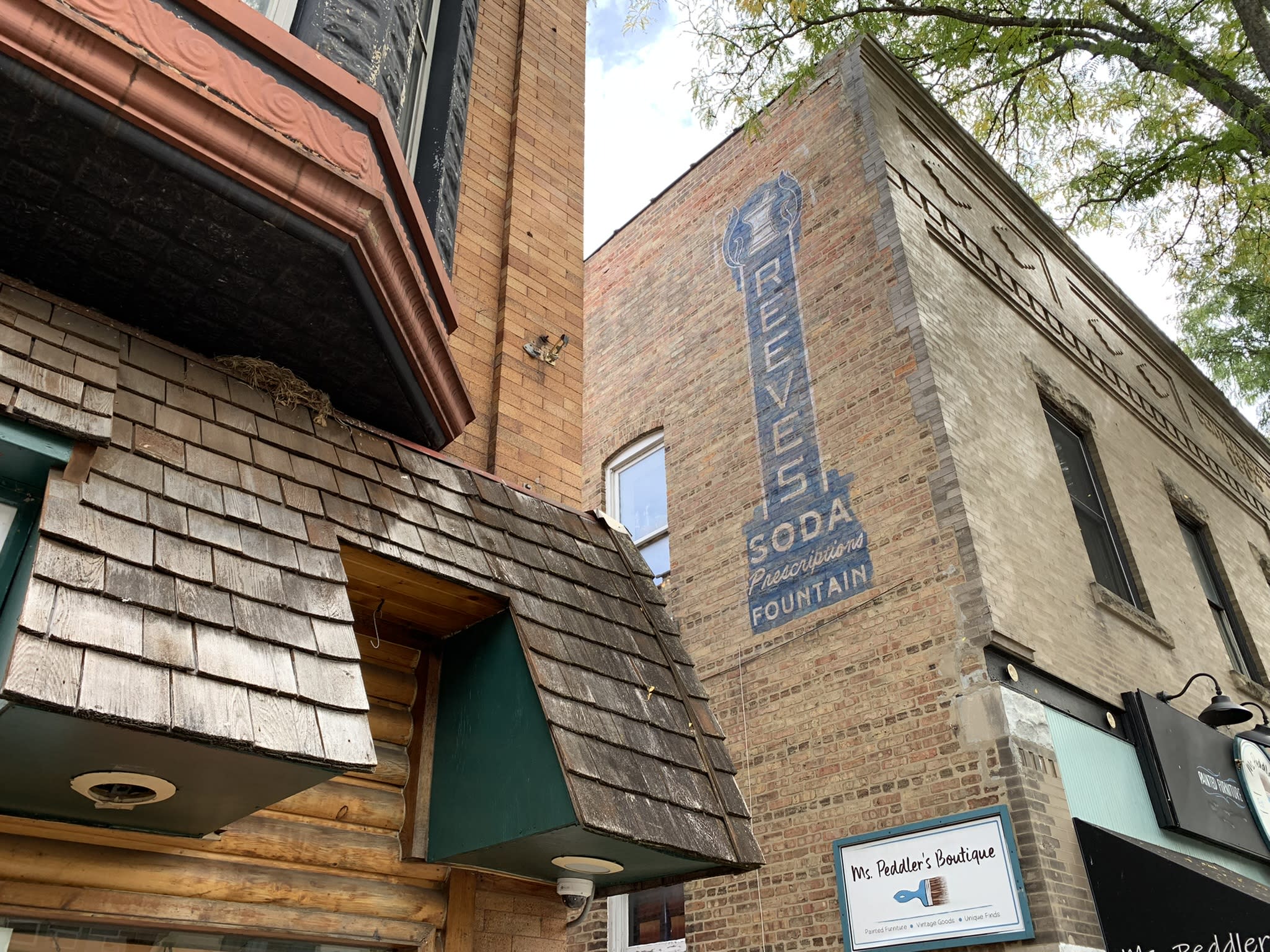
The businesses that filled those buildings are coming back too. GHOSTED is a village program that restores Antioch's original hand-painted ghost signs and adds new ones, working down the downtown alleys and onto the side of Village Hall. It is ongoing rather than finished, so what is on the brick keeps changing.
The lake era, and the stories after it
The Chain O' Lakes is fifteen lakes and the Fox River, the busiest inland waterway in Illinois, and it is the reason Antioch learned the hospitality business. Farmers took in boarders. Boarders needed rooms, so farmhouses added them. Rooms became hotels and hotels became vacation cottages, and you can still book one. Anglers still put Lake Marie at the top of the Chain for fishing, and the cottages at Cypress Resort are the same idea the town had a long time ago.
The Prohibition chapter is the one visitors ask about, and it belongs to the region rather than to Antioch alone. Al Capone and Bugs Moran vacationed out here and fought over turf, and the hotel most often named in those stories is over in Fox Lake. Take the rest of what you hear as stories. The documented version and the tellable version parted ways a long time ago.
Still open, still running
The Lakes Region Historical Society keeps the museum and the paper trail, and it is the shortest way into the parts of Antioch's past that never got a plaque. The village's early generations carried abolitionist convictions and sent men to the Union Army. If you want to follow a particular family, a particular house or a particular enlistment, that is a question for the society rather than for a wall panel.
The rest of the town's history is still open for business. PM&L Theatre has been staging community productions since 1960. The Antioch Theatre still runs movies downtown. Family Heirloom Antiques and Hannah's Home Accents sell the furniture and objects that came out of these houses. Pickard China still manufactures in town. None of it is a re-creation, which is the part visitors tend to notice last.
Next door
The Ghost Signs The old storefront names are going back onto the brick downtown, hand-painted, down the alleys and onto the side of Village Hall. GHOSTED tells you where to stand.